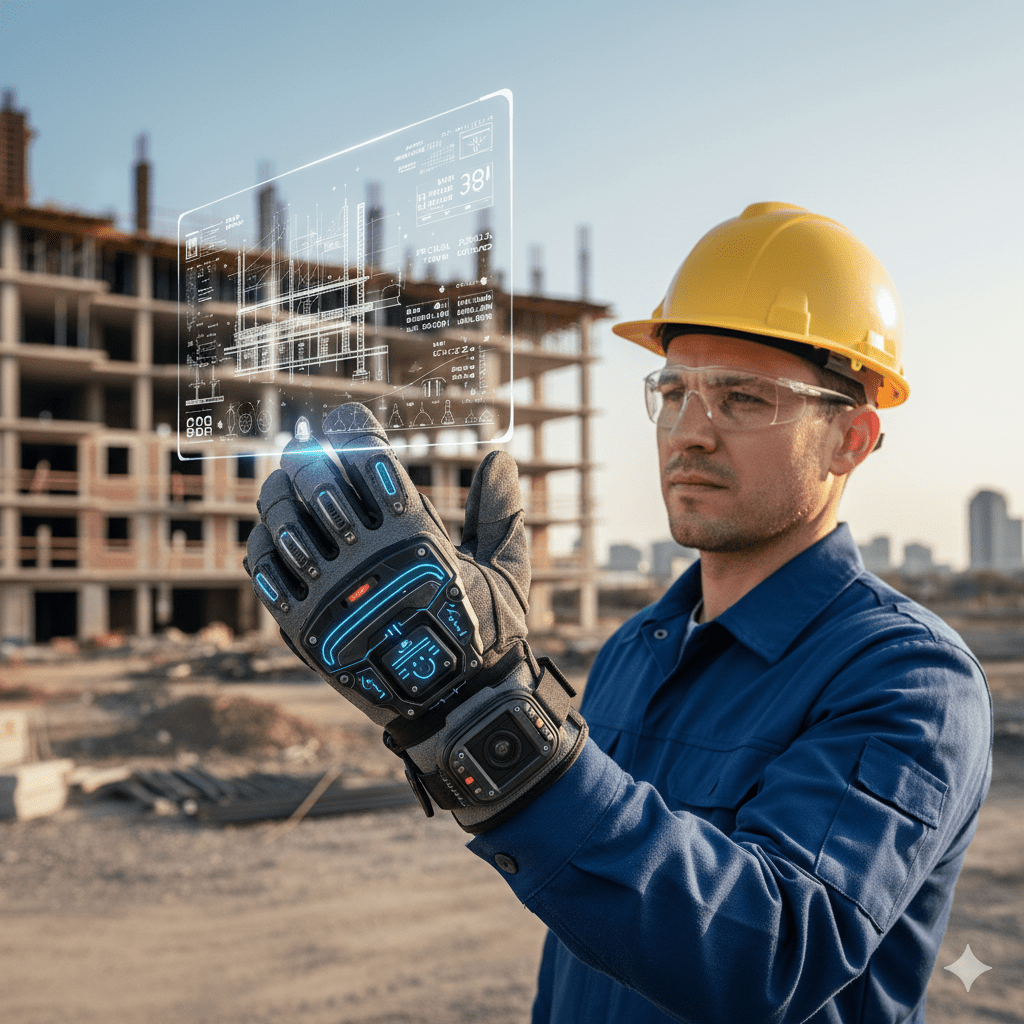
For construction professionals, maintaining high productivity and impeccable safety standards in complex, dynamic environments is an enduring challenge. To secure long-term viability, the construction sector must embrace advanced technologies and shift away from its traditionally conservative nature, where adopting new technology can take approximately 17 years from the proof-of-feasibility stage.
Today, innovation is actively tackling core project challenges, primarily across two crucial fronts: Automation and Strategic Digital Planning.
Automation and Robotics: Enhancing Safety and Quality
The construction industry remains a major industrial sector for occupational accidents, injuries, and fatalities. Automation and robotics directly address this safety gap by taking over tasks that are repetitive, tedious, hazardous, or physically dangerous.
Examples of current automation include specialized mobile construction robots designed for specific, repetitive tasks such as concrete smoothing and finishing. In heavy civil works, autonomous systems such as Semiautonomous Dump Trucks (HIVACS) are utilized to overcome worker shortages and prevent accidents on heavy construction sites. Furthermore, automated technology like the automated stone-cutting facility ensures that stone elements for exterior wall facings are pre-cut with increased quality and predictability off-site.
Strategic Planning: Optimising Space and Time
Modern technologies leverage computing power to treat site space as a critical resource, comparable to money, time, labour, and equipment. Poor layout resulting from conventional methods (often relying solely on human judgment) can lead to productivity losses and safety incidents.
Computer-Aided Design (CAD) based Site Layout models provide a design support tool that enables site planners to develop efficient layouts in an interactive manner. These models incorporate Artificial Intelligence techniques—such as knowledge-based systems, neural networks, and genetic algorithms—to efficiently search for near-optimum locations for temporary facilities. By applying geometric reasoning, these models analyze spatial constraints and objectives (like security or minimizing travel distance) to produce an efficient layout. In practice, a CAD-based model can analyze complex constraints and suggest a near-optimum location for a construction object in approximately 30 seconds on a standard computer, a process that might otherwise require multiple meetings among decision makers.
The Path to Implementation
While the benefits are clear—increased productivity, quality, and lower construction costs—successful integration demands managerial commitment. Innovation hinges on relational governance and the presence of “champions” (often project managers) who proactively seek, support, and implement new ideas.
Professionals must recognize that achieving innovation benefits requires overcoming inherent industry obstacles, including the need for economic justification, addressing the fear of job loss among workers, and securing management interest from the conceptual stage through to implementation. By fostering this supportive organisational climate, firms can effectively harness these technological advancements to achieve a competitive advantage.
 LaborAll
Leave a comment