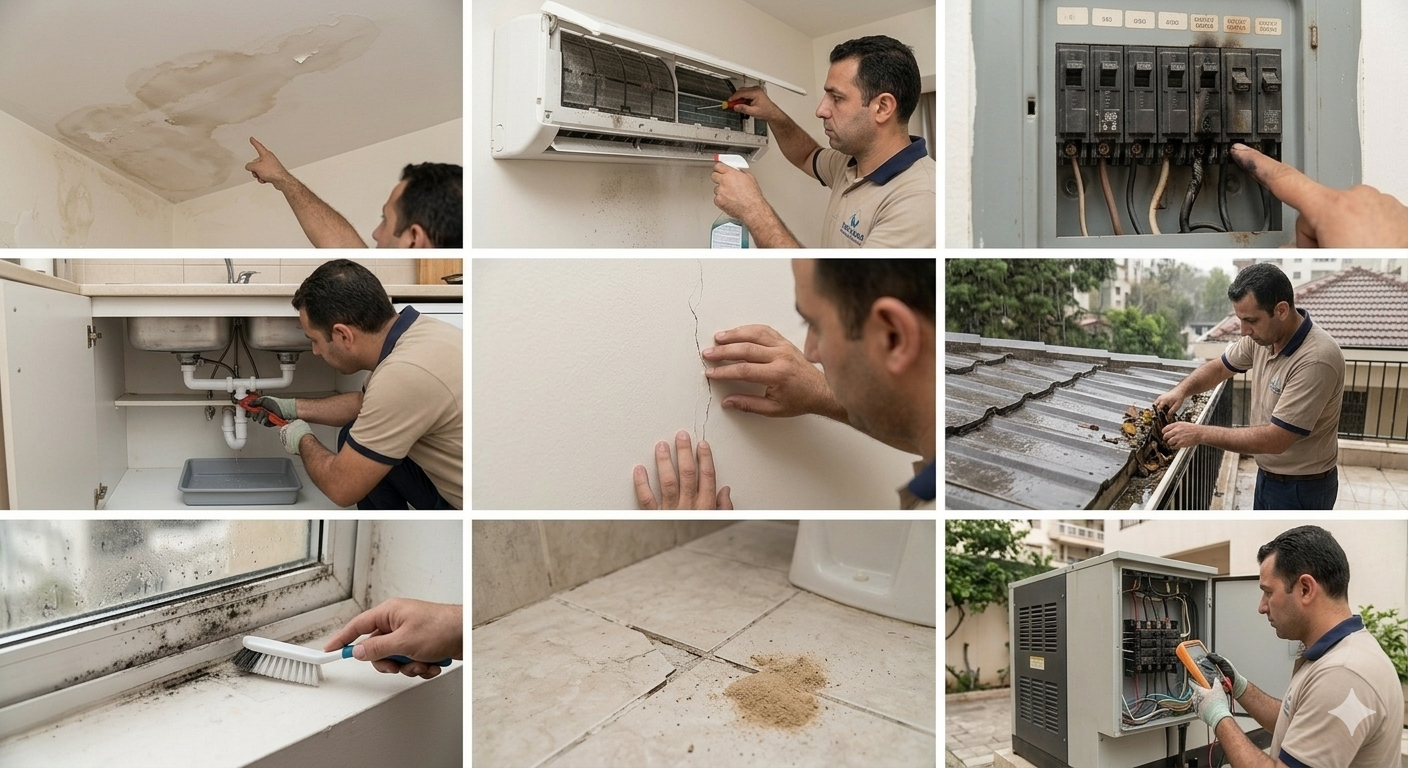
Your home rarely breaks down overnight.
The water leak that damages your ceiling tomorrow probably started months ago.
The electrical failure that leaves half your apartment without power likely began with a warning sign you didn’t notice.
The air conditioner that stops working during the hottest week of summer often gave subtle clues long before it failed.
Most expensive repairs don’t happen because problems are unavoidable.
They happen because small issues are ignored.
For homeowners in Beirut and across Lebanon, regular maintenance isn’t simply about keeping a property looking good. It’s about protecting one of the most valuable investments you’ll ever make.
This guide covers the most common maintenance problems homeowners face and explains how to identify them before they become expensive emergencies.
Why Home Maintenance Matters More in Lebanon
Homes in Lebanon face unique challenges.
Throughout the year, properties are exposed to:
- Summer heat and humidity
- Winter rainstorms
- Dust and pollution
- Aging building infrastructure
- Heavy air conditioning usage
- Electrical load fluctuations
- Moisture infiltration
Over time, these factors affect every part of a property.
The good news is that most major repairs can be prevented with routine inspections and timely maintenance.
Plumbing Problems That Start Small and Become Expensive
Water is one of the most destructive forces inside any home.
Unlike many maintenance issues, water damage continues to spread until the source is fixed.
1. Ceiling Water Stains
Many homeowners assume ceiling stains are cosmetic.
In reality, they often indicate:
- Hidden pipe leaks
- Roof infiltration
- Waterproofing failure
- Drainage problems
The larger the stain becomes, the more extensive the damage may be behind the surface.
2. Slow Drains
A drain that empties slowly is often the first stage of a blockage.
Ignoring it can eventually lead to:
- Overflowing sinks
- Flooded bathrooms
- Pipe damage
- Unpleasant odors
3. Water Pressure Problems
Low pressure may signal:
- Pipe deterioration
- Hidden leaks
- Valve issues
- Mineral buildup
A professional inspection can identify the underlying cause.
4. Leaking Faucets
A dripping faucet seems harmless.
Over time, however, it wastes water, increases costs, and may indicate broader plumbing issues.
Electrical Problems Every Homeowner Should Watch For
Electrical systems often provide warning signs before failure occurs.
The challenge is recognizing them.
5. Flickering Lights
Occasional flickering can happen.
Frequent flickering should not be ignored.
It may indicate:
- Loose wiring
- Overloaded circuits
- Electrical panel issues
6. Circuit Breakers That Keep Tripping
Breakers are designed to protect your home.
Repeated trips usually indicate an underlying problem that requires attention.
7. Warm Outlets
Electrical outlets should never feel hot.
Warm outlets may signal dangerous electrical conditions.
8. Burning Smells
This is one warning sign that should always be treated seriously.
Electrical odors often indicate overheating components.
Air Conditioning Problems That Increase Electricity Bills
Many homeowners don’t realize that AC systems lose efficiency gradually.
As performance declines, energy consumption increases.
9. Weak Airflow
Reduced airflow often points to:
- Dirty filters
- Blocked coils
- Fan issues
10. Poor Cooling Performance
If rooms take longer to cool than before, maintenance may be overdue.
11. Water Leaking From the AC
This commonly results from clogged drains or frozen coils.
Ignoring it can damage walls, paint, and flooring.
12. Strange Noises
Grinding, rattling, or buzzing sounds should never be dismissed.
They usually indicate mechanical wear.
Wall and Ceiling Problems That Signal Bigger Issues
Walls often reveal hidden problems long before homeowners discover their source.
13. Cracks in Walls
Not every crack is serious.
However, growing cracks should always be evaluated.
14. Peeling Paint
Peeling paint often indicates:
- Moisture problems
- Water infiltration
- Poor ventilation
15. Damp Spots
A damp wall is rarely an isolated issue.
Moisture almost always has a source that requires investigation.
Mold: The Problem That Keeps Coming Back
Many homeowners focus on removing mold.
Few focus on why it appeared.
16. Mold Around Windows
Often caused by condensation or ventilation issues.
17. Mold on Ceilings
Frequently linked to leaks or trapped moisture.
18. Musty Smells
Persistent odors often indicate hidden moisture problems even when mold is not visible.
Exterior Problems That Can Damage Your Home
The outside of your property protects everything inside it.
Small exterior issues often lead to major interior repairs.
19. Cracked Exterior Walls
These cracks can allow moisture to penetrate the structure.
20. Blocked Roof Drains
One of the most common causes of winter water damage.
21. Damaged Balcony Drainage
Poor drainage can lead to water infiltration and structural deterioration.
Problems Homeowners Frequently Overlook
Some maintenance issues receive little attention until they become expensive.
22. Loose Tiles
Loose tiles can indicate movement, moisture problems, or installation issues.
23. Broken Grout
Damaged grout allows water to reach areas that should remain protected.
24. Worn Silicone Around Bathrooms and Kitchens
This inexpensive material plays a major role in preventing water damage.
25. Ignored Maintenance History
The most common problem of all is postponing maintenance.
Every homeowner intends to address issues eventually.
Many simply wait too long.
A Simple Annual Home Maintenance Checklist
At least once a year, inspect:
✓ Plumbing fixtures
✓ Water heaters
✓ Air conditioners
✓ Electrical outlets
✓ Circuit breakers
✓ Balcony drains
✓ Roof drainage
✓ Exterior walls
✓ Ceiling stains
✓ Bathroom ventilation
✓ Tile grout and silicone
✓ Windows and doors
Finding problems early is almost always cheaper than repairing damage later.
Frequently Asked Questions
How often should a home be inspected for maintenance issues?
A basic inspection should be performed annually, with additional checks before winter and summer.
What maintenance issue causes the most expensive repairs?
Water damage is among the most costly because it can affect walls, ceilings, flooring, paint, electrical systems, and furniture simultaneously.
What should homeowners fix first?
Problems involving water leaks, electrical safety, or structural concerns should always take priority.
Can regular maintenance reduce repair costs?
Yes. Most major repairs begin as minor issues that become more expensive when left unresolved.
The Most Expensive Word in Homeownership: “Later”
Most homeowners don’t ignore maintenance because they’re careless.
They ignore it because life gets busy.
The stain on the ceiling can wait.
The flickering light isn’t that bad.
The leaking faucet only drips occasionally.
The AC still works, even if it’s slower than before.
The problem is that homes don’t pause while we postpone repairs.
Water continues spreading.
Electrical systems continue aging.
Small cracks continue growing.
What costs a little today often costs significantly more tomorrow.
The homeowners who spend the least on repairs are not the ones with perfect houses.
They are the ones who pay attention to small problems before they become large ones.
A well-maintained home is safer, more comfortable, more energy efficient, and far less expensive to own over the long term.
And in Beirut, where weather, infrastructure, and building age can all create challenges, proactive maintenance remains one of the smartest investments a homeowner can make.
Leave a Reply